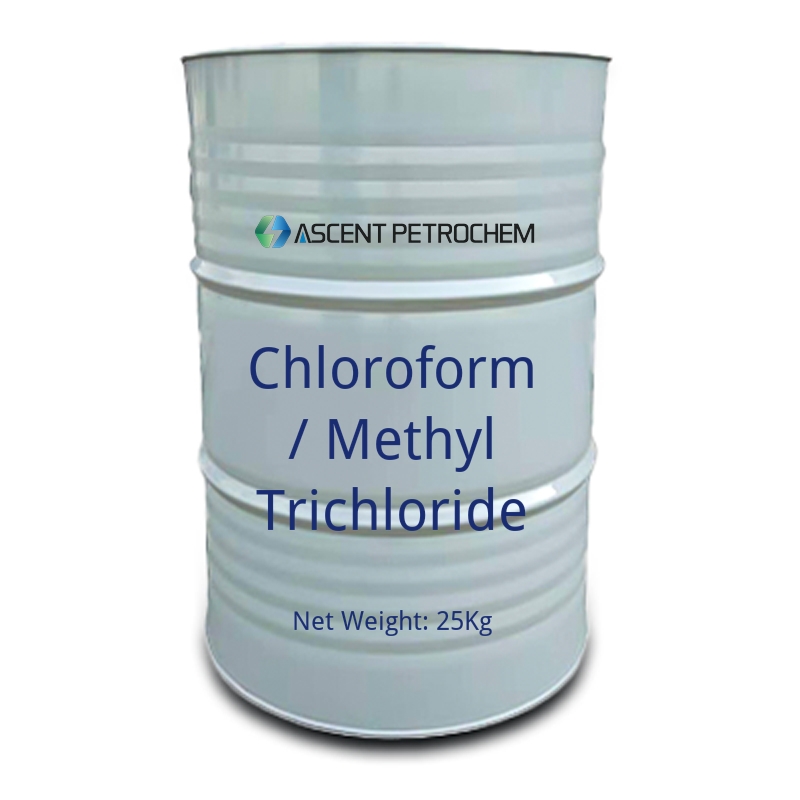
Chloroform / Methyl Trichloride
- Product Name: Chloroform / Methyl Trichloride
- Factroy Site: Yudu County, Ganzhou, Jiangxi, China
- Price Inquiry: sales6@ascent-chem.com
- Manufacturer: Ascent Petrochem Holdings Co., Limited
- CONTACT NOW

- Chloroform / Methyl Trichloride is typically used in formulations when solvent polarity, evaporation rate, exposure limits, and thermal stability must be controlled within specific ranges.
| HS Code | |
| Productname | Chloroform / Methyl Trichloride |
| Synonym | Trichloromethane; Methyl trichloride |
| Chemicalformula | CHCl3 |
| Casnumber | 67-66-3 |
| Molecularweight | 119.38 g/mol |
| Appearance | Colorless liquid |
| Odor | Sweet, ethereal, characteristic |
| Boilingpoint | 61.2 °C |
| Meltingpoint | -63.5 °C |
| Density | 1.483 g/cm³ at 20 °C |
| Solubilityinwater | Slightly soluble, about 0.8 g/100 mL at 20 °C |
| Vaporpressure | 21.2 kPa at 20 °C |
| Refractiveindex | 1.4459 at 20 °C |
| Flashpoint | Non-flammable |
| Unnumber | 1888 |
| Hazardclass | 6.1 |
As an accredited Chloroform / Methyl Trichloride factory, we enforce strict quality protocols—every batch undergoes rigorous testing to ensure consistent efficacy and safety standards.
| Packing | Chloroform/Methyl Trichloride supplied in 1 L amber glass bottle with PTFE-lined cap, labeled and packed in outer fiberboard carton. |
| Container Loading (20′ FCL) | Chloroform (Methyl Trichloride) loaded in a 20-foot FCL container, using sealed drums, secured, labeled, and documented as hazardous cargo. |
| Shipping | Chloroform (methyl trichloride) is shipped as UN1888, Hazard Class 6.1, Packing Group III—a toxic liquid. Proper shipping name: Chloroform. Use UN-certified, leakproof packaging with toxic labels, shipping papers, and emergency response information. Transport ventilated, secure, and away from food, oxidizers, and ignition sources; comply with DOT/IMDG/IATA rules. |
| Storage | Store chloroform (methyl trichloride) in a cool, dry, dark, well-ventilated area, away from direct sunlight, heat, and incompatible substances like oxidizers, bases, and reactive metals. Keep containers tightly closed, upright, labeled, and stabilized (e.g., ethanol). Use secondary containment, local exhaust, and avoid inhalation. Do not store near food or ignition sources. Check periodically for degradation. |
| Shelf Life | Chloroform shelf life is about five years when stabilized and stored away from light, air, and heat; decomposition forms phosgene. |
What Limits CHCl₃ Conversion to HCFC-22 in Excess-AHF Liquid-Phase Reactors?
The continuous liquid-phase fluorination of chloroform with anhydrous hydrogen fluoride (AHF) to yield chlorodifluoromethane (HCFC-22, R-22) proceeds according to the stoichiometry CHCl₃ + 2HF → CHClF₂ + 2HCl in a nickel 200 or Monel 400 alloy stirred reactor, where antimony pentachloride (SbCl₅) is maintained at 1.5–3.0 wt% of the liquid reaction mixture. Published production-line data indicate that the catalyst deactivates irreversibly when the water content of the chloroform feedstock exceeds 50 ppm, because hydrolysis of SbCl₅ generates volatile SbCl₃ and increases reactor corrosion rates; therefore the chloroform feed specification for fluorination service requires purity of ≥99.9 wt%, water content of ≤50 ppm as determined by Karl Fischer titration per ASTM E 203-16, non-volatile residue of ≤5 ppm, and free chloride of ≤5 ppm. The operating envelope is constrained by two competing factors: insufficient AHF excess shifts the product distribution toward under-fluorinated HCFC-21 (CHCl₂F), while excessive AHF beyond a 3.0:1 molar ratio increases HF carryover into the overhead HCl stream and raises energy demand for HF recovery. Industrial units operate at an AHF-to-chloroform molar feed ratio of 2.2:1 to 2.8:1, with reactor temperature controlled within 65–85°C and system pressure maintained at 1.0–1.5 MPa to suppress HF vaporization while permitting continuous HCl off-gas removal through a controlled-temperature reflux condenser. Under these conditions, published industrial data report chloroform conversion exceeding 99% and selectivity to HCFC-22 exceeding 98 mol%, with HCFC-21, HCFC-23 (CHF₃), and trace hydrogen-containing polymeric tars constituting the residual balance. Product purification involves water scrubbing to remove HCl and residual HF, countercurrent drying with 90–95 wt% H₂SO₄, and molecular sieve adsorption to reduce refrigerant-impairing moisture to below 10 ppm w/w. Compliance for HCFC-22 as a refrigerant is governed by AHRI Standard 700-2019 Section 4, which specifies limits for moisture, acidity, high-boiling residue, and non-condensable gases, while ASHRAE Standard 34-2022 classifies R-22 as safety group A1. For HCFC-22 consumed as chemical feedstock for fluoropolymer intermediates, the Montreal Protocol Article 2F phase-down schedule imposes national consumption quotas; the feedstock-use exemption requires annual reporting under Article 7 of the Protocol. Terminal product types include R-22 refrigerant for servicing existing air-conditioning and refrigeration systems in Article 5 parties within allowed consumption limits; tetrafluoroethylene (TFE) via pyrolysis of HCFC-22 at 650–750°C in steam-diluted tubular reactors, followed by suspension or emulsion polymerization to polytetrafluoroethylene (PTFE) powders and aqueous dispersions; hexafluoropropylene (HFP) generated as co-product during TFE pyrolysis, then copolymerized with TFE to fluorinated ethylene propylene (FEP) and perfluoroalkoxy (PFA) resins; and fluoroelastomers based on VDF-HFP and TFE-propylene chemistries where the fluorochemical monomer chain originates from HCFC-22 feedstock. Published data for optimization of agitation rate and residence time in specific reactor configurations is limited; operational refinement is generally proprietary to the licensee.
| Parameter | Operating Range | Typical Setpoint | Failure Mode Outside Range |
|---|---|---|---|
| HF:CHCl₃ molar feed ratio | 2.2:1 – 2.8:1 | 2.5:1 | <2.1:1 increases HCFC-21 selectivity; >3.0:1 increases HF carryover |
| Reactor temperature (°C) | 65–85 | 75 | >90°C accelerates catalyst decomposition and tar formation |
| System pressure (MPa) | 1.0–1.5 | 1.2 | <0.8 MPa reduces HF liquid-phase contact; >1.6 MPa requires thicker vessel walls |
| Feedstock water (ppm) | ≤50 | ≤20 | >100 ppm causes SbCl₅ hydrolysis and corrosion |
| Conversion (% CHCl₃) | 98–99.5 | 99 | Incomplete conversion reports as residual CHCl₃ in HCl overhead |
| Selectivity to HCFC-22 (mol%) | 97–99 | 98 | Reduced selectivity increases HCFC-21 and HCFC-23 purge load |
Alkaloid recovery from dried Atropa belladonna, Datura stramonium, and Cinchona officinalis plant material is executed by pH-adjusted liquid-liquid partitioning into chloroform, a solvent selected because its water solubility of 8.09 g/L at 20°C and density of 1.48 g/cm³ enable rapid phase disengagement in centrifugal contactors, while its extraction selectivity for tertiary alkaloid free bases at alkaline pH reduces co-extraction of water-soluble pigments and polyphenolic contaminants. The dried and ground botanical charge is moistened with 10% w/v sodium carbonate solution or 2 M ammonium hydroxide to depress pH to 9.0–10.5, releasing alkaloid free bases from their water-soluble salts; extraction proceeds at a solvent-to-biomass ratio of 4–8 mL chloroform per gram of dried powder in a multi-stage countercurrent percolation battery operating at 35–45°C for 2–6 h per stage. Two to three sequential extraction stages achieve 90–95% recovery of total alkaloid activity, with the raffinate exhausted to a residual alkaloid content of ≤0.2% w/w of the original dry biomass. Process-scale equipment includes Alfa Laval disc-stack extractors operating at 1800–2200 rpm or Podbielniak centrifugal contactors with individual stage hold-up times of 30–90 s; batch operations in glass-lined vessels with mechanical agitation are used where production volume falls below 500 L per batch. The organic extract is concentrated in a wiped-film evaporator at 40–50°C and 15–20 kPa absolute pressure, and the resulting alkaloid-enriched oleoresin is partitioned against dilute hydrochloric or sulfuric acid to convert free bases to aqueous salt forms, leaving chlorophyll and wax residues in the chloroform phase. Residual chloroform in the isolated active pharmaceutical ingredient is controlled to below 60 ppm to satisfy ICH Q3C (R8) for a Class 2 solvent with a permitted daily exposure (PDE) of 0.6 mg/day; compliance is demonstrated by headspace gas chromatography per USP <467> or Ph. Eur. 5.4, with method sensitivity validated to ≤6 ppm to ensure detection below the specification limit. Equipment cleaning validation follows FDA 21 CFR 211.67 and requires swab sampling with recovery factors between 50–150%. Operational boundaries for this application are defined by two incompatibilities: chloroform reacts slowly with primary amine-containing substrates under strongly basic conditions via the carbylamine pathway, and prolonged contact times above 6 h at temperatures above 50°C produce trace phosgene by oxidative degradation; therefore extraction protocols set a maximum temperature of 45°C and a maximum residence time of 6 h for amine-bearing botanical lots. Terminal product types include atropine sulfate, scopolamine hydrobromide, quinine sulfate, and their intermediate free-base forms, which enter downstream pharmaceutical formulation for injectable, ophthalmic, and antimalarial dosage presentations.
Pyrethrum Marc Exhaustion by Continuous Countercurrent Percolation and Solvent Recovery Economics
Extraction of dried Tanacetum cinerariifolium flower heads containing 1.2–1.8 wt% total pyrethrins with chloroform in a continuous countercurrent percolation battery proceeds at a solvent-to-marc ratio of 4:1 to 6:1 (w/v) and a temperature of 35–50°C to limit thermal degradation of pyrethrin I and pyrethrin II esters. Each extraction stage operates with a residence time of 60–90 min, and six percolation stages arranged in a De Smet belt extractor or rotary carousel attain marc exhaustion to a residual pyrethrin content of <0.2 wt%, corresponding to 85–90% recovery of total pyrethrins from the dried flower powder. The miscella is concentrated in a falling-film evaporator at 45°C and 20 kPa absolute pressure, with solvent recovery exceeding 98% and recycled chloroform subjected to water separation and redistillation before return to the percolation battery. Dewaxing of the concentrated oleoresin is performed by cooling to 0–5°C for 12–24 h and filtering the precipitated plant waxes through a 5 μm filter cloth; the dewaxed extract is standardized to 25% or 50% w/w total pyrethrins with light mineral oil or isopropyl myristate. Compliance for the technical concentrate is governed by the FAO/WHO Joint Meeting on Pesticide Specifications (JMPS) for pyrethrum extract, with pyrethrin content determined by CIPAC Method 33/TC/M/-; the WHO specification for public health pesticide products additionally requires control of piperonyl butoxide when the extract is formulated as a space spray. Registration of the final emulsifiable concentrate under EU PPP Regulation 1107/2009 requires data on the active substance specification, batch analysis, and extractable residues, while in the United States EPA FIFRA registration under 40 CFR Part 158 includes acute toxicity and environmental fate data packages. Terminal product types include pyrethrum oleoresin at 25% total pyrethrins, refined pyrethrin concentrate at 50% w/w, emulsifiable concentrate formulations containing 2–5% w/w pyrethrins, pressurized aerosol sprays delivering 0.1–0.5% w/w pyrethrins with hydrocarbon propellants, and mosquito coil matrices incorporating 0.1–0.3% w/w pyrethrin content.
In NMR solvent preparation, deuterated chloroform (CDCl₃) is manufactured from chloroform by base-catalyzed hydrogen-deuterium exchange with heavy water or by chlorination of perdeuterated methane; the product is specified at 99.8 atom% D minimum with a residual protiochloroform content below 0.2 atom%, because the residual proton singlet at δ 7.26 ppm must remain sufficiently weak to avoid masking sample signals in 1H NMR spectra. The deuterated solvent is stabilized with silver foil or 0.03% v/v tetramethylsilane (TMS) as an internal chemical shift reference, and packaged in 0.75 mL, 25 g, and 100 g borosilicate glass ampoules sealed under argon. In routine structural characterization, the analyte is dissolved at 5–20 mg/mL in CDCl₃; for quantitative NMR (qNMR), the sample concentration is reduced to 1–5 mg per 0.6 mL solvent to maintain linear detector response, and the acquisition is performed on a Bruker Avance III HD 400 MHz or 600 MHz spectrometer with a 30° pulse and relaxation delay exceeding 5 × T₁ of the quantified protons. Quality control of CDCl₃ follows USP <761> for NMR spectroscopy practice and Ph. Eur. 2.2.33 for method performance verification; quantitative NMR method validation for API assay is conducted per ASTM E 2977-15, which specifies evaluation of specificity, linearity, accuracy, and precision. Reference material producers supplying CDCl₃ operate under ISO 17034:2016 for certified reference materials, with lot-to-lot deuterium content verified by 2H NMR integration and water content controlled to ≤0.01% w/v by Karl Fischer titration. Terminal product types include NMR tubes pre-filled with CDCl₃ for automated sample changers, sealed reference standards of organic compounds dissolved in CDCl₃ for qNMR and structure validation, and customized deuterated solvent blends for pharmaceutical release testing. Operational boundaries: samples containing anhydride or acyl chloride functionality must be pre-quenched, because deuteration reagents and residual moisture in CDCl₃ hydrolyze these groups and alter spectra; long-term storage of CDCl₃ ampoules at temperatures above 30°C accelerates silver-catalyzed decomposition and generates phosgene traces, requiring storage at 4–8°C and use within 12 months of opening.
| Grade | Purity (wt%) | Water (ppm) | Non-volatile Residue (ppm) | Stabilizer | Test Method Reference |
|---|---|---|---|---|---|
| Technical (fluorination feedstock) | ≥99.9 | ≤50 | ≤5 | None | ASTM E 203-16, internal GC-FID |
| USP/NF pharmaceutical | 99.0–99.8 | ≤500 | ≤20 | Ethanol 0.5–1.0% | USP Chloroform monograph, USP <467> |
| ACS Reagent | ≥99.8 | ≤300 | ≤10 | Amylene 50–100 ppm | ACS Reagent Chemicals monograph |
| HPLC/spectrophotometric | ≥99.9 | ≤200 | ≤5 | None or amylene | Internal HPLC-UV at 245 nm, Karl Fischer per ASTM E 203-16 |
When Chloroform Replaces Dichloromethane in PMMA Capillary Welding of Medical Device Housings
Neat chloroform delivered through a 0.25–0.41 mm internal diameter syringe needle is drawn into PMMA joint gaps by capillary action, where the solvent swells and mobilizes the polymer chain network at the interface to form a continuous bond upon evaporation. For gap-filling cement formulations, 3–10 wt% PMMA powder (Mw 1.5–3.0 × 10⁵ g/mol) is dissolved in chloroform to yield a cement viscosity of 800–1500 cP at 25°C; this range is selected because lower viscosity cements do not bridge joint gaps exceeding 0.2 mm, while higher viscosity cements trap solvent and produce void defects during evaporation. The welded assemblies are clamped at 50–150 kPa and conditioned at 25 ± 2°C and 40–60% RH for 24–48 h to allow residual chloroform to diffuse out; residual solvent content in the bonded zone is verified below 0.5 wt% by thermogravimetric analysis at 150°C. Mechanical integrity of the solvent-welded joint is evaluated using ASTM D638-14 Type IV tensile specimens cut across the bond line, with acceptable joints achieving 70–90% of the parent PMMA ultimate tensile strength (55–75 MPa); additional torsional and compressive evaluations are aligned with ISO 527-2 and ISO 179-1. For medical device applications, the finished welded housing must demonstrate cytotoxicity compliance per ISO 10993-5 and, where patient-contacting, USP <88> Class VI biological reactivity requirements. Chloroform is selected over dichloromethane when a slower evaporation rate (approximately 4× longer drying time than DCM at 25°C) is required to permit alignment of complex multi-part assemblies, but chloroform attacks polycarbonate surfaces more aggressively than DCM and is contraindicated for solvent welding of multi-layered PC/PMMA laminates where interfacial haze is unacceptable. Terminal product types include acrylic cuvettes for spectrophotometry, IV drip chambers, blood gas analyzer housings, microfluidic chip substrates, and optical components such as light guides and display frames. A documented production-line failure mode is the formation of micro-voids at the joint when ambient relative humidity exceeds 60%, because atmospheric moisture condenses into the evaporating solvent front; pre-drying of the components at 40–50°C for 4 h prior to welding is required in humid manufacturing environments.
When aqueous DNA or RNA solutions require deproteinization, an equal volume of a 25:24:1 (v/v/v) phenol:chloroform:isoamyl alcohol mixture is added and the phases are gently mixed for 1–2 min; the chloroform component increases the density of the organic phase to 1.47–1.49 g/cm³, facilitating phase separation, and the isoamyl alcohol suppresses foaming and stabilizes the phenol-chloroform interface. The extraction is performed at a 1:1 volume ratio of organic phase to aqueous phase, followed by centrifugation at 16,000 × g for 15 min at 4°C; two sequential extractions remove 99% of protein and membrane-lipid contaminants. Residual phenol is removed by a single back-extraction with an equal volume of chloroform, followed by precipitation of nucleic acids with 2.5 volumes of cold 96% ethanol in the presence of 0.1 volume of 3 M sodium acetate at pH 5.2. For RNA purification, the aqueous phase is adjusted to pH 4.0–4.5 with acid phenol:chloroform, which partitions DNA into the interphase and organic layer while retaining RNA in the aqueous phase. Purified genomic DNA or plasmid DNA is assessed for purity by UV spectrophotometry, with an A260/A280 ratio of 1.8–2.0 considered acceptable for downstream enzymatic reactions; A260/A230 ratios above 2.0 indicate absence of residual phenol contamination. Compliance for laboratories performing nucleic acid extraction for regulated applications is governed by ISO 17025:2017 general requirements for testing and calibration laboratories; for GMO detection workflows, extraction performance is validated under ISO 21571:2005, which specifies nucleic acid quality criteria for PCR amplification. Nonclinical safety studies conducted under FDA 21 CFR Part 58 (Good Laboratory Practice) require documented standard operating procedures for extraction, including lot-controlled reagents and equipment calibration records for centrifuges and spectrophotometers. Terminal product types include purified genomic DNA for whole-genome sequencing, plasmid DNA for cloning and transfection, total RNA for RT-qPCR, and DNA extracts for forensic short-tandem-repeat typing. The operational boundary for this application is strict control of chloroform purity: reagent-grade material containing ethanol stabilizer can interfere with phase separation; therefore ACS Reagent chloroform stabilized with 50–100 ppm amylene is specified, and unstabilized material must be verified free of phosgene decomposition products before use.
Isolating Anthraquinone-Derived Disperse Dye Intermediates via Chloroform Anti-Solvent Precipitation
For anthraquinone-derived disperse dye intermediate isolation, chloroform functions as a non-solvent precipitation phase in polar aprotic reaction media such as dimethylformamide or dimethyl sulfoxide. The reaction mass is added dropwise to 3–5 volumes of chilled chloroform at 0–5°C under high-shear agitation, where the product crystallizes as fine particles of 5–25 μm median diameter, while starting-material impurities remain dissolved; the suspension is vacuum-filtered through a 5 μm polypropylene filter cloth, washed with one volume of fresh chloroform, and dried in a vacuum tray at 60°C and 15 kPa to residual chloroform below 100 ppm. Compliance for the isolated intermediate depends on the regulatory status in the market of destination: under CLP Regulation (EC) 1272/2008, chloroform is classified Carc. 2, Repr. 2, STOT RE 1, and residual solvent content in finished dyed textile articles is controlled under OEKO-TEX Standard 100 limitations for chlorinated solvent residues; dye intermediate manufacturers supplying integrated textile production chains typically provide residual solvent certificates determined by headspace GC-ECD per an internal method validated to ISO 17025. Terminal product types include purified anthraquinone intermediates subsequently converted to anthraquinone disperse dyes such as Disperse Blue 60 and Disperse Violet 26 for polyester fiber dyeing.
Competitive Chloroform / Methyl Trichloride prices that fit your budget—flexible terms and customized quotes for every order.
For samples, pricing, or more information, please contact us at +8618018036652 or mail to sales6@ascent-chem.com.
We will respond to you as soon as possible.
Tel: +8618018036652
Email: sales6@ascent-chem.com
Get Free Quote of Ascent Petrochem Holdings Co., Limited
Flexible payment, competitive price, premium service - Inquire now!
- Chloroform / Methyl Trichloride is manufactured under an ISO 9001 quality system and complies with relevant regulatory requirements.
- COA, SDS/MSDS, and related certificates are available upon request. For certificate requests or inquiries, contact: sales6@ascent-chem.com.
Chloroform, also known as methyl trichloride and trichloromethane, is a chlorinated aliphatic hydrocarbon with CAS Registry Number 67-66-3, empirical formula CHCl₃, and molecular weight 119.38 g/mol. Commercial product is supplied as a clear, colourless, mobile liquid with a typical assay of ≥99.8% in ACS reagent grade and ≥99.0% in technical grade. Selected physical constants are a density of 1.483 g/cm³ at 20 °C, boiling point 61.2 °C, melting point -63.5 °C, refractive index 1.4459 at 20 °C, dielectric constant 4.81 at 20 °C, dipole moment 1.04 D, vapour pressure 21.3 kPa at 20 °C, and water solubility approximately 8.0 g/L at 20 °C. The substance is a Class 2 residual solvent under ICH Q3C with a permitted daily exposure of 0.6 mg/day and a concentration limit of 60 ppm in finished pharmaceutical products. Industrial supply chains distinguish grades by stabiliser identity, water content, residue on evaporation, and free acidity; the stabiliser system is the principal variable governing storage life and downstream compatibility.
Specification Ranges for Stabilised Commercial Grades
The following table summarises representative acceptance bands for four commercial designations. A supplier certificate of analysis should be retained for each lot because compendial and ACS limits are not identical across all parameters.
| Parameter | ACS Reagent Grade | Pharmacopoeial Grade | HPLC/Spectrophotometric Grade | Technical Grade |
|---|---|---|---|---|
| Assay (GC, as CHCl₃) | ≥99.8% | 99.0–100.5% including ethanol | ≥99.9% | ≥99.0% |
| Stabiliser | Ethanol 0.5–1.0% v/v | Dehydrated ethanol 0.5–1.0% v/v | Amylene 0.002–0.02% w/w or ethanol 0.5–1.0% v/v | Unstabilised or amylene |
| Water (Karl Fischer) | ≤0.03% | ≤0.05% | ≤0.02% | ≤0.03% |
| Residue after evaporation | ≤0.001% | ≤0.001% | ≤0.0005% | ≤0.005% |
| Free acidity (as HCl) | ≤0.001 mEq/g | Passes pharmacopoeial test | ≤0.0005 mEq/g | ≤0.001 mEq/g |
| Free chlorine | ≤0.0005% | Passes test | ≤0.0002% | Reported |
The pharmacopoeial grade is defined by the presence of dehydrated ethanol as preservative; the ethanol occupies part of the nominal assay window and is not a separate impurity in the monograph. Ethanol-stabilised material is preferred when a single solvent must serve both extraction and residual-solvent documentation under ICH Q3C because ethanol is a Class 3 solvent. Amylene-stabilised HPLC grade is used in analyte recovery methods where alcohol interference in electron-capture detection or UV-transparent gradient methods must be avoided. Technical grade may be supplied without stabiliser for immediate captive use. Package configurations range from 1 L and 4 L amber glass bottles to 200 L phenolic-lined steel drums and stainless steel tankers; the packaging is specified by stabiliser package and customer unloading capability.
Commercial supply designations for methyl trichloride are commonly differentiated by the stabiliser package rather than by the chlorocarbon backbone. Ethanol-stabilised material at 0.5–1.0% v/v is used in pharmaceutical extraction and compendial testing because the stabiliser is itself a Class 3 residual solvent and does not introduce olefinic by-products into final drug substance steps. Amylene-stabilised material, typically 0.002–0.02% w/w, is specified for catalyst-sensitive or halogen-sensitive downstream chemistries where alcohol content would interfere with organometallic reactions or adsorption onto silica gel. Unstabilised chloroform is produced only for immediate in-situ consumption under inert atmosphere; it is not recommended for storage in drums or intermediate bulk containers.
The limiting storage parameter is not the CHCl₃ assay but the accumulation of photochemical oxidation products. Under ultraviolet light and oxygen headspace, chloroform degrades to phosgene and hydrogen chloride. Ethanol and amylene act as sacrificial scavengers, and their depletion is not visible from GC assay alone. In bulk tank operations, the degradation rate is highest at the vapour–liquid interface and in translucent sight glasses; stainless steel or phenolic-lined storage tanks with dry nitrogen blanketing are preferred. Production-scale solvent recovery stills can strip ethanol into the aqueous phase during water washing; recovered distillate should be re-stabilised and retested for free acidity before reuse. For anhydrous organic synthesis, neutral molecular sieves are preferred for drying; strongly basic desiccants or alkali metals should be excluded because base-induced dehydrohalogenation can generate dichlorocarbene and accelerate exothermic decomposition.
Acceptance of a received lot should include boiling range by ASTM D1078, density by ASTM D4052, water by Karl Fischer titration in accordance with ASTM D1364, and free acidity by titration. Analytical-grade chloroform for gas chromatography must be free of stabiliser interference. Ethanol can mask early eluting analytes on polar GC columns; amylene-stabilised product is therefore selected for electron-capture detection and high-sensitivity GC–MS. The low-UV cutoff of chloroform is approximately 245 nm; for spectrophotometric work below that wavelength, cyclohexane or acetonitrile is specified instead. This boundary is a performance limitation rather than a purity specification.
In pharmaceutical manufacturing, methyl trichloride is used in extraction and purification of lipophilic intermediates where a heavier-than-water organic phase reduces emulsion formation and accelerates settler throughput. Its density of 1.483 g/cm³ at 20 °C provides faster phase disengagement than ethyl acetate or methyl tert-butyl ether in batch and continuous extraction equipment. Drying to <0.02% water is required before use in Grignard or organolithium reactions because water at higher levels quenches active metal intermediates and accelerates free acid formation. Residual chloroform is quantified by headspace gas chromatography under USP <467>; method validation uses a polar stationary phase and electron-capture or mass-selective detection, with calibration solutions prepared from certified reference material. Quantitation below 60 ppm is required for release of finished drug product.
When High-Boiling Halogenated Extractants Are Required
Extraction and chemical intermediate applications are selected when a denser-than-water organic phase and moderate hydrogen-bond acidity are required. In continuous liquid–liquid extraction columns, chloroform forms the lower phase and can be recovered by batch distillation at 61.2 °C; phase disengagement is faster than with ethyl acetate or methyl tert-butyl ether. Fixed-bed activated carbon adsorbers with steam regeneration are used on production-scale vent lines; wetted parts in pumps and seals are selected from fluoropolymer or stainless steel to reduce swelling and leakage. The substance is not classified as flammable under standard atmospheric conditions, but thermal decomposition generates phosgene and hydrogen chloride, so vented equipment must be routed to scrubbed exhaust.
Laboratory-scale use includes liquid–liquid extraction of alkaloids and lipophilic natural products, and phase-transfer generation of dichlorocarbene from chloroform and 50% aqueous sodium hydroxide with a quaternary ammonium catalyst. This reaction is strongly exothermic and is controlled by slow addition of concentrated alkali to a cooled mixture. The major industrial demand for chloroform is captive conversion to chlorodifluoromethane (HCFC-22) by liquid-phase reaction with hydrogen fluoride in the presence of antimony pentachloride. The resulting HCFC-22 is then used as a feedstock for tetrafluoroethylene under controlled conditions. This use is regulated under the Montreal Protocol and is not an emissive solvent application.
Comparative selection against dichloromethane, carbon tetrachloride, and trichloroethylene involves four solvent properties that change process outcomes independently: boiling point, density, water solubility, and residual-solvent classification.
| Property | Chloroform | Dichloromethane | Carbon tetrachloride | Trichloroethylene |
|---|---|---|---|---|
| CAS Registry Number | 67-66-3 | 75-09-2 | 56-23-5 | 79-01-6 |
| Boiling point at 101.3 kPa | 61.2 °C | 39.6 °C | 76.7 °C | 87.2 °C |
| Density at 20 °C | 1.483 g/cm³ | 1.326 g/cm³ | 1.594 g/cm³ | 1.464 g/cm³ |
| Water solubility at 20 °C | 8.0 g/L | 13.2 g/L | 0.8 g/L | 1.1 g/L |
| ICH Q3C residual-solvent status | Class 2, 60 ppm, PDE 0.6 mg/day | Class 2, 600 ppm, PDE 6.0 mg/day | Class 1, 4 ppm, PDE 0.004 mg/day | Class 2, 80 ppm, PDE 0.8 mg/day |
| Montreal Protocol ozone-depletion status | Not controlled as ozone-depleting | Not controlled as ozone-depleting | Controlled, phased out for emissive uses | Not controlled as ozone-depleting |
Replacement of chloroform by dichloromethane in extraction is sometimes driven by lower boiling point and faster evaporative recovery. However, dichloromethane has lower density and higher water solubility, so phase disengagement in continuous extractors may require longer settler residence. Carbon tetrachloride is not acceptable for new pharmaceutical processes because of ICH Q3C Class 1 residual-solvent status; its higher density and lower water solubility do not offset the toxicological and environmental restrictions. Trichloroethylene has a higher boiling point of 87.2 °C and is used in vapour degreasing, but its unsaturated structure requires inhibitor packages and its ICH Q3C Class 2 limit is 80 ppm, which is not equivalent to the 60 ppm limit for chloroform.
What Operational Boundaries Must Be Monitored in Bulk Handling?
Bulk storage of chloroform is governed by the need to exclude light, oxygen, and moisture. Storage tanks should be vertical, welded, stainless steel or phenolic-lined carbon steel, fitted with dry nitrogen blanketing and pressure/vacuum conservation vents with activated carbon adsorbers. Transfer pumps should be sealless magnetic-drive or double mechanical seal with fluoropolymer wetted parts. Receiving and transfer areas require local exhaust ventilation and continuous monitoring suitable for chlorinated hydrocarbons. Empty containers retain vapours; drums should be grounded during transfer and stored closed in a ventilated area.
The substance is classified as a probable human carcinogen; occupational exposure control is mandatory. The OSHA permissible exposure limit is a ceiling of 50 ppm (240 mg/m³). Process venting must not be discharged without scrubbing because thermal decomposition under fire or high-temperature maintenance can generate phosgene and hydrogen chloride. Materials of construction should avoid prolonged contact with light metal alloys and strong bases; use glass, stainless steel, or fluoropolymer linings. Strong oxidizers and alkali metals are incompatible and must be separated from storage areas.
In solvent recovery operations, the recovered distillate often fails free acidity because stabiliser is lost into aqueous phases. The distillate should be re-stabilised to 0.5–1.0% v/v ethanol and retested for assay, water, free acidity, and residue after evaporation before re-entry into qualified cleaning or process solvents. If the water extract pH falls below 5.0, the lot is considered decomposition-prone and should be rejected or redistilled under inert conditions. This operational boundary is more restrictive than the nominal assay limit and is the primary early indicator of photochemical degradation.